
Last Updated 2 years ago
Sometimes we take for granted the technology that is out there in the world. The fact that we can drive cars without gasoline doesn’t seem to awe us as it probably should.
We are literally used by now to the concept of cars powered by batteries so much so that we don’t even think about how the weather can affect the efficiency of these vehicles.


We just expect that the electric car will take us from point A to point B. But if we are honest with ourselves, the environment plays such a huge role in the performance of any vehicle, and being aware of this can save us a lot of headaches.
Tesla’s batteries died in blistering cold temperatures
According to CNBC, several drivers in Chicago have reported issues with the performance of the batteries in their Teslas.
Among the many complaints, drivers expressed their frustration about the long time it is taking the batteries to charge. When the usual charging time is about 45 minutes, now in winter it takes up to two hours to charge. Who has the time and money to charge their car for that long?


Not only the batteries are taking longer to charge, but users also reported that some of the “supercharging” stations did not work. All these caused several electric cars to be abandoned in the parking lots in Chicago or had to be towed due to dead batteries.
How does it impact electric vehicle users?
This is not an isolated event that only happened to Tesla cars. All electric vehicles are impacted by extreme cold temperatures reducing the amount of time the battery produces energy and the amount of time it takes to charge; it means that the driving range of all electric vehicles is reduced with cold temperatures.
As reported by Recurrent, freezing temperatures reduce differently the driving range depending on the brand and the model. They tested different Tesla models and all of them showed a reduction of 24% in driving range compared to the advertised range. What stands out in this report is the Volkswagen ID.4, which shows a driving range reduction of 46%.

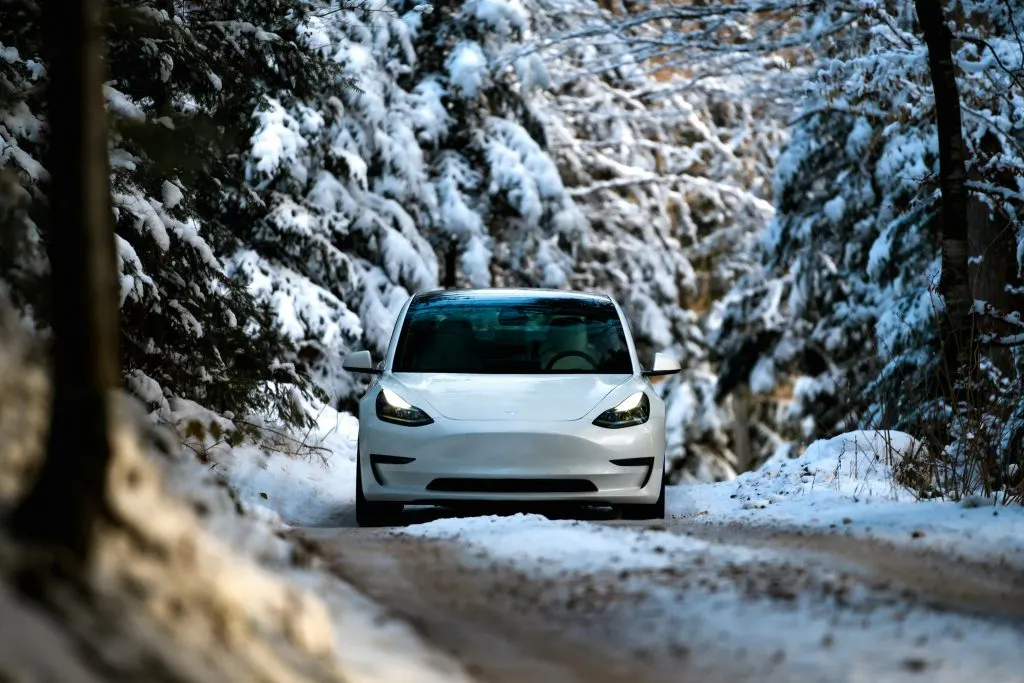
EV lovers living on the north side of the country must consider this before buying an electric vehicle. Electric cars are great cars for summer, but they need special attention during winter. This might make drivers prefer hybrid models over electric cars.
Such preference for hybrids over EVs is on everyone’s radar these days that even Ford recently announced they are shifting gears cutting the production of the F-150 Lighting in its Michigan manufacturing plant to focus on gas-electric hybrid models, as reported by Reuters.
Why do cold temperatures affect EVs?
There are two main reasons why cold weather affects the batteries and thus the electric vehicles.
One reason is the chemical reactions that occur inside the battery. With cold temperatures, these processes happen much more slowly. Imagine you heat honey, it will flow faster than when it is cold. Something like this will happen inside the battery reducing the charge or making the charging process slower.


If one thing is certain is that all of us use the heater when it’s cold outside. And if another thing is certain, is that we all have pushed the gas pedal to heat the engine faster so that this same heat can increase the temperature in the cabin.


Well, electric vehicles need to use the batteries instead to heat the cabin which also contributes to lower the driving range.
What can EV drivers do to avoid running out of battery in winter?
On its website, Tesla gives a set of recommendations for their customers to better take care of their vehicles during cold weather. Here are the main tips to ensure correct battery charging:


- The battery needs to be preconditioned before charging. This means that the battery must be pre-heated to be ready for an optimal charge.
- Tesla users should use Trip Planner to find a charging station even if the driver already knows the location of the station. Trip Planner ensures the battery is ready to be charged.
- Trip Planner should be used at least 30 min before arriving at the charging station.
- If the station is closer to 30 min, then the driver must precondition the battery before driving.